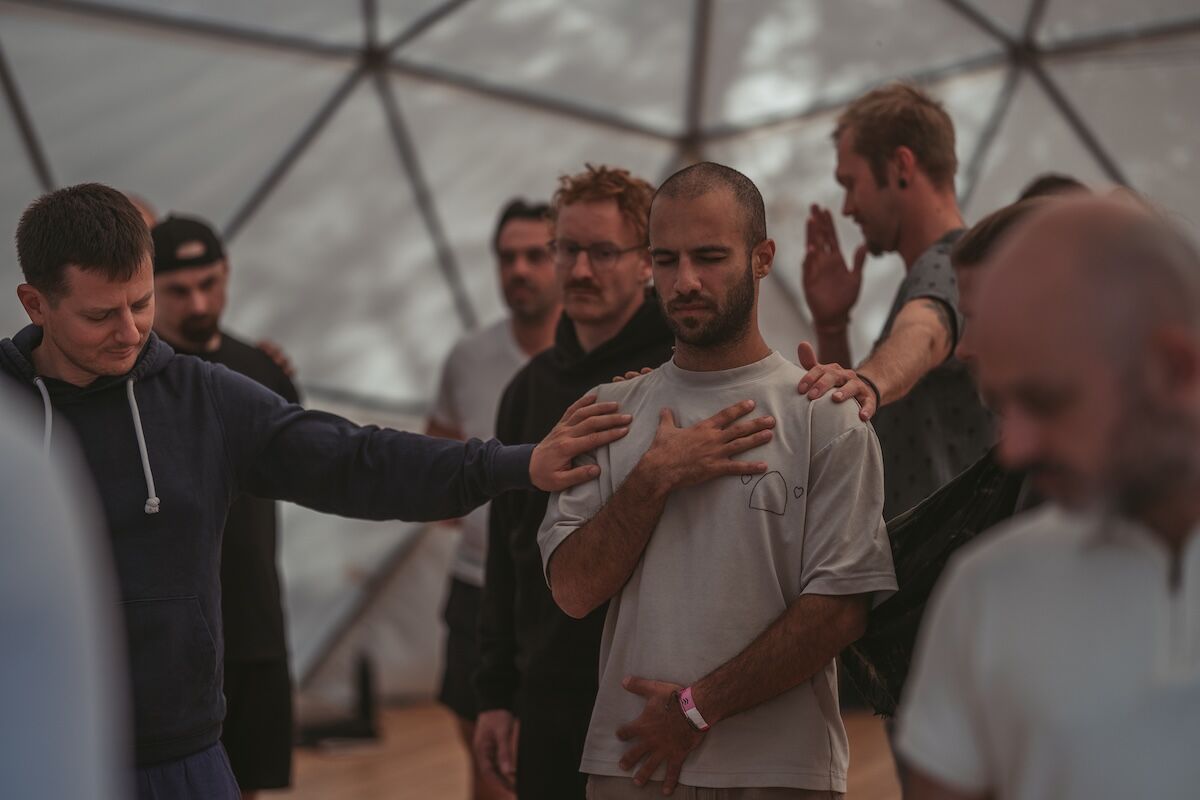


The ceremony ended. But the real journey is just beginning.
You’ve returned to your life. Only it doesn’t quite feel like your life.
Once the medicine opens the inner vault, there’s no going back.
What’s been seen can’t be unseen. It can feel like your inner world is now leading the way—without a map.
One moment, you feel clear, connected, alive.
The next, you’re raw, overwhelmed, or strangely numb.
Old memories rise out of nowhere. Emotions you thought were resolved resurface with full force.
This is the emotional rollercoaster many experience after a psychedelic journey.
And it’s not a sign that something went wrong.
It’s a sign that something long-buried is coming to the surface.
For high performers, entrepreneurs, and leaders, those used to staying in control, this can feel disorienting.You’re no longer steering the ship. The body is speaking. The unconscious is moving.
And that can be both liberating and deeply unsettling.
Whether you joined a psychedelic retreat in Portugal, had a 1:1 session with a trusted guide, or journeyed privately, what you’re feeling now is part of the healing.
This post will help you understand why emotions can feel so intense after the ceremony ends—and how to ride those waves with care, clarity, and compassion.
Let’s begin.
Psychedelics don’t just show us new insights.
They soften the defences that usually keep our deeper emotions at bay.
During a journey, you may have touched profound grief, unprocessed trauma, or long-buried joy.
The medicine opens a door, but what comes through often continues to ripple long after the experience ends.
This is because your emotional body is still in the process of integrating.
The nervous system is recalibrating.
Old survival patterns are dissolving.
That can feel exhilarating—or deeply disorienting.
Like the scaffolding that once held you up is being dismantled
Like you’re losing your grip, or even losing your mind.
But this isn’t a breakdown.
It’s a rite of passage.
In indigenous and nature-based cultures, there are ceremonies that mark the transition from adolescence to adulthood.
Structured initiations that help us shed the skin of who we’ve been so we can step into who we’re here to become.
But in the modern Western world, we’ve lost that.
So when this kind of ego death happens—through psychedelics or spiritual awakening—it often arrives without the tools to navigate the journey.
And without those tools, it’s easy to panic, to resist, to try and hold your old life together.
But something essential is happening here.
You’re being initiated into a more authentic life.
A way of being that’s less driven by survival and more aligned with your Soul.
It may feel like life will never go back to the way it was.
And in some ways, it won’t.
What’s emerging is a version of you that can live and lead with ease, purpose, and alignment.
This is a long arc of transformation.
Like a psychedelic journey that unfolds over months, sometimes even years.
The more you resist it, the longer it lingers.
But the more you surrender, the more life begins to show you what’s possible.
Because beneath the crumbling lies the unique blueprint of your Soul.
The key to navigating the post-journey emotional landscape is care.
You don’t need to “fix” what’s arising. You need to stay present with it. To honour the emotions as messengers, not problems.
Here are 5 ways to support your integration:
Create buffer time in your schedule. Avoid diving straight back into high-stimulation environments or heavy decision-making. Give yourself space to breathe and let the dust settle.
Crying, shaking, laughter, anger—whatever needs to come, let it come. Movement, breathwork, dance, and sound are powerful tools for releasing emotional energy.
Externalise what you’re feeling. Not to analyse it, but to witness it. Sometimes, just giving voice to your inner experience can bring relief and clarity.
You don’t have to do this alone. A skilled therapist, coach, or guide—especially one experienced in psychedelic integration—can help you navigate what’s arising and stay anchored in the deeper process.
Emotional processing can be exhausting. Resting is integration. Nourishment is integration. Laughter is integration. Trust the pace of your becoming.
One of the most surprising parts of integration is that things may get more intense before they settle. You might find yourself:
This doesn’t mean the medicine “didn’t work.” It often means it did.
Psychedelics lower your psychological defences. They make space for what’s been suppressed to emerge to be felt, understood, and integrated.
This can be confronting. But it’s also an opportunity.
Emotional triggers are invitations to go within and liberate stuck parts of ourselves. Every time we accept the invitation, we create more presence, peace, and freedom.
After a deep psychedelic journey, you may feel more open, vulnerable, or spiritually connected. However, your partner, friends, or colleagues may not have undergone the same transformation. This often creates friction.
You might:
This is common. You’ve changed. And change ripples through your relationships.
Relationships often mirror back the very lessons the journey began to reveal. With patience, humility, and boundaries, these relationships can become powerful opportunities for growth.
Not every psychedelic journey ends in bliss. Some leave you in the dark—but that’s where the deepest growth often begins.
Sometimes, the days or weeks after can feel confusing, heavy, or even destabilising. You might wonder:
This is a critical, and often misunderstood, phase of the process.
Psychedelics don’t just add light. They illuminate the shadow. And when long-held emotions, identities, or coping mechanisms begin to dissolve, it can feel like you’re falling apart.
But here’s the truth:
Unravelling is not failure. It’s the beginning of renewal.
The part of you that is disoriented may be the part that no longer fits who you’re becoming.
This is the cocoon. And while it’s not glamorous, it’s sacred time.
Trust that, just as the caterpillar disintegrates before becoming a butterfly, you too will one day fly—after a lifetime of crawling.
If you’re used to being the one others rely on—at work, in your family, in your community—then asking for help can feel unfamiliar. Even vulnerable.
But in the aftermath of a psychedelic experience, you don’t need to hold it all alone.
In fact, one of the most courageous things you can do is let yourself be supported, not because you’re failing, but because you’re evolving.
This is especially true for high performers. You’ve likely built success through self-reliance, drive, and focus. But integration asks something different:
None of which thrive in isolation.
Whether it’s a therapist, coach, integration circle, or trusted guide, having a safe space to express, digest, and make sense of what’s emerging is essential.
Because the deeper truth is: You’re integrating a new version of yourself. One that doesn’t need to carry everything alone.
And this version needs support to land and lead from a different place.
In the early days after a psychedelic journey, everything can feel heightened—your emotions, your insights, your clarity.
You might feel wide open, connected to something greater, and deeply aligned with your core values. But for most people, this state fades over time. The world pulls you back into its rhythm. Old patterns begin to resurface. And the clarity you felt so strongly starts to blur.
Long-term integration is the process of allowing the experience to shape how you present yourself in the world. Not just for a week. But for the rest of your life.
For leaders and entrepreneurs, this can look like:
When you stay with the integration—not just when it feels good, but also when it’s messy—you build resilience, clarity, and emotional depth.
And that creates a new, solid foundation.
Your leadership becomes effective and regenerative.
Your presence becomes powerful and healing.
Your life becomes successful, meaningful, and deeply fulfilling.
The emotional rollercoaster after psychedelics isn’t a sign that something went wrong.
It’s a sign that something meaningful happened.
You opened the door. You saw. You felt. You let go.
And now, you’re being invited to live differently.
That takes time. It takes patience. And it takes support.
But if you stay with it, riding the waves instead of trying to bypass them, you’ll find yourself not just healing… but evolving.
This is the deeper promise of psychedelic work. Not a peak experience, but a path that leads back home.
If the ride feels wild, know this: it means you’re on track. Keep breathing, one breath at the time.
Read the latest insights and stories on the power of psychedelic-assisted therapy and holistic personal development for leaders and entrepreneurs.